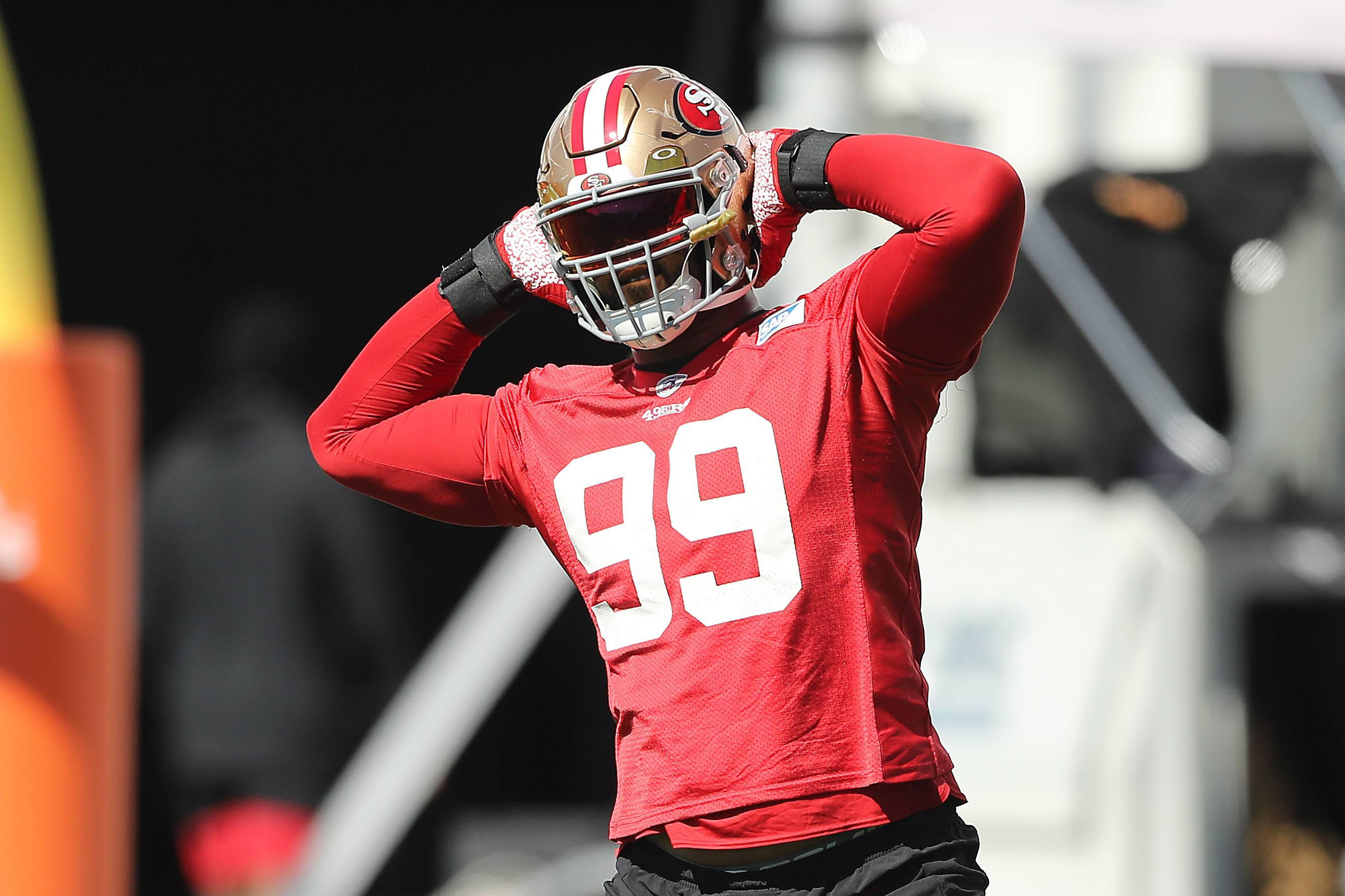
Eric Edholm NFL writer Tue, October 27, 2026 at 10:03 PM UTC · 5 min read About Our Ads Advertisement Advertisement Advertisement The Indianapolis Colts made their second major trade on Tuesday, sending defensive tackle DeForest Buckner back to the San Francisco 49ers via trade for a 2027 fourth-round pick.
After trading Quenton Nelson to the Seahawks, the Colts – who dropped to 2-5 on Sunday – are clearly looking to the future and accumulating more draft picks with no first-rounder in 2027.
Buckner is now back with the 49ers, who made him a first-round pick in 2016. He spent four years there and the past six-plus in Indianapolis.
How does this trade grade out for the Colts and 49ers? Let's dive into the details.
It was not a shock to see Buckner end up back in San Francisco. That reunion made too much sense.
The Niners never wanted to trade Buckner in the first place, viewing it as a painful but necessary business decision. They could only pay one of their prime defensive tackles, Buckner and Arik Armstead, coming off the Super Bowl LIV loss to the Chiefs. So Buckner got dealt, Armstead got paid, and the 49ers drafted Javon Kinlaw.
Right after the trade, GM John Lynch called it "probably the toughest thing" he'd done to that point. More than a year later, head coach Kyle Shanahan, prior to facing the Colts and Buckner in 2021, Shanahan admitted that he "miss(ed) Buck a lot." No disrespect to Kinlaw, but the 49ers eventually knew the Colts got the better player in the deal. Tuesday's trade closed that circle, to a degree.
The 49ers needed defensive help up front, and Buckner looks like the right-shaped peg for their hole inside. Osa Odighizuwa has supplied some pressure, and rookie Gracen Halton has had some big moments, but they're the only Niners DTs to play every game. There weren't many other dependable pieces inside. It was also a group that lacked length and the ability to close down passing lanes. Odighizuwa and Halton have the only two batted passes for the team this season.
They're expecting Nick Bosa back to help the edge group out, but he's been injury-plagued for more than a year now, and it's becoming less clear just how dependable an asset he'll be long term, especially given the Niners' horrific injury luck.
DeForest Buckner spent four years with the 49ers, and now he's back after a trade with the Colts. (Photo by Michael Reaves/Getty Images)
Buckner has the well-rounded skill set to lift all the boats a bit on defense. He's also likely to be a strong, respected voice in the locker room, even with a lot of new faces since he last played there.
He's missed more games the prior two seasons than ever before in his career, but Buckner returned from a lengthy offseason rehab and has stayed healthy this season, contributing at a high level in 2026. He's used to higher snap counts and can play virtually any technique along the line, occasionally even standing up on the edge as a rusher.
His four sacks through seven games match his 2025 season total (in 10 games), and Buckner has more QB hits (eight) than anyone on the Niners this season. Buckner also has more batted passes (three) than the whole Niners roster so far.
Now a once-thin DT rotation has three viable options, including one in Buckner who has a little bit more positional flexibility than the others do. With Bosa back, this front can be a strength again. The cost was right about where you'd imagine, considering Bucker is 32 and set for free agency, and it could leave the 49ers a bit light on Day 3 picks next year, but the risk felt worth it for a familiar face who should step right in and reprise a similar role to when he first left.
The Quenton Nelson trade was a bit more surprising, given that Nelson was an original Colt who had signed a major extension a few years back, compared to Buckner's shorter two-year deal after arriving via trade. But both were set for free agency, and neither were favorites to return next season.
It only made sense for them to get what they could for both, even at the short-term cost of significantly weakening both lines of scrimmage for a suddenly wayward team.
The Colts got about what could be expected in return, and considering how depleted their draft-pick drawer is with no first-round pick next year, every pick counts. Even with the 2027 picks they got for Nelson and Buckner likely falling closer to the ends of those respective rounds, the Colts are accumulating more immediate assets to compete for a quarterback next year. It's smarter than waiting a year for compensatory-pick value, even if they're having to pay for past sins.
Buckner is still an above-average to very good interior defender, but his Colts future appeared dim. It also will be interesting to see if Grover Stewart, Buckner's former running mate, is made available for trade. Given how Tuesday has played out, it wouldn't be shocking if anyone was made available.
The Colts lost a lot of toughness and leadership Tuesday. They also lost two highly reliable forces up front. There will be opportunities for younger players to emerge, and that's likely part of the vision of these trades, but the reality is that they were a necessary evil given how the past few years have played out at quarterback and last season's collapse after the 8-2 start.
And now they will look to the draft and, with some pretty clean books, free agency to revamp the roster. There's a talent void, but also an intangible one after Tuesday's deals.
Source: Sports



0 Comments